
Welcome to day two of Wuthering Heights Week here at White Rose of Avalon, my Darlings. Today’s post is about Wuthering Heights and how Emily Brontë utilized the unreliable narrator twice in this novel with the characters of Ellen Dean and Mr. Lockwood! As a sidenote, I will be referring to Ellen Dean alternately by Ellen and Nelly, as Nelly is her nickname and she is referred to alternately by either name in the original novel.
Now, I did briefly discuss the dual-narrator structure of the novel in yesterday’s post, but today I want to dig into the actual narrators and how they may be unreliable. To begin, I want to state that any first-person narrative, when critically analyzed, needs to take into account that the narrator may be unreliable. In the case of Wuthering Heights, we have a narrator within a narrator structure, with the novel beginning from the viewpoint of Mr. Lockwood, and then transitioning into Ellen Dean’s point of view when she related her the story of Catherine and Heathcliff.
We actually never learn very much about Mr. Lockwood, other than brief references to why he chose to rent out Thrushcross Grange from Mr. Heathcliff. The only other thing we know about Lockwood is that he felt attracted to Catherine Linton Heathcliff from the first time he visited Wuthering Heights, enamored by her beauty. The fact that we do not know much about Mr. Lockwood immediately makes his reliability as a narrator questionable. As for Nelly Dean, I have always thought that her closeness to the story being told means that she has her own interest in putting across the story in the way that she does. It is clear that Nelly much preferred certain characters to others, and that she never really liked Catherine or Heathcliff very much, which is something she admits of her own accord. That, put together with the fact that she was a servant in their homes, and therefore always observing, but not being a part of the world of Catherine, Edgar, and Isabella, adds layers of context.
Ellen Dean was not much older than Catherine Earnshaw, but she was born to a mother who worked at Wuthering Heights, and likely always knew that she would go from growing up with Catherine and her brother Hindley to one day serving them. It makes sense that Nelly would be so much more mature than others in her generation, given that she needs to work to earn her keep. However, this is also something that can breed resentment, and it calls into question a lot of how she portrayed Catherine Earnshaw (later Catherine Linton) and even Isabella Linton. While I do not think that the way she characterized either woman is wholly false, I do think that her own feelings of jealousy may show a tendency to judge the more privileged women of her generation a bit more harshly.
So, that makes us uncertain of just how cruel and unlikable Catherine was, as we do not have an alternate point of view describing her in life, for she was dead for many years before Mr. Lockwood arrived. From his perspective, we only encounter Catherine’s Ghost, which frightened him, and Lockwood does relay Mr. Heathcliff’s begging of Catherine’s Ghost to stay with him. The rest of what the reader gets to know of Catherine comes from Nelly Dean. Nelly Dean, who admits that she never liked Catherine much, but was always in her confidence due to Catherine’s supreme loyalty to people she had known since childhood.
Just how cruel was Catherine really? For instance, did she really pinch Nelly so harshly with Edgar present? Or, is that an embellishment made by Ellen Dean to portray Catherine as spoiled and selfish, due to what happened directly following? After all, that pinch comes right before Catherine and Edgar get engaged, and Catherine comes to Nelly for advice. Nelly judged Catherine for getting engaged to Edgar, which could not be undone, while also admitting to loving both Edgar and Heathcliff. This is especially true when Catherine explained that her love for Edgar is changeable, but her love for Heathcliff would never end. Of course, it is also during this conversation that Ellen knows Heathcliff is in the room, out of Catherine’s sight, and she does not stop her from admitting to her engagement or from stating that she could not marry Heathcliff, as they would be beggars. Ellen even knows that Heathcliff left before hearing the part where Catherine admitted that she got engaged to Edgar in order to use his money and influence to free Heathcliff from being under her brother’s control. This scene, although it is one of my favorite moments in the novel, with Catherine’s description of her love for Heathcliff, has also always made me feel some animosity towards Nelly. She chose to let this information be exposed this way, which caused Heathcliff to run off for three years, and Catherine to search for him in the pouring rain, making her so ill she nearly died.
In fact, later on, when Catherine is ill yet again, after the confrontation between Heathcliff and Edgar about Isabella, Nelly does not believe Catherine is ill. She lets this go on for three days before informing Edgar of his wife’s state. This is something Nelly admits directly, and even stated that she got scolded for it by Edgar. That is something that truly calls into question just what else Nelly may have done, or not done, that she may be ashamed to admit in her story. Furthermore, this is a perfect segue into Ellen Dean’s description of Heathcliff.
When she finally goes to get the doctor, at Edgar’s behest, she has to save Isabella’s dog, who has been hanged. Luckily, the dog survived, and she saw her running around the garden again when she arrived home. It was at that point that Ellen found out that Isabella had run off with Heathcliff, but did not tell Edgar, letting him discover it in the morning. It is strongly implied in the scenes with the dog that Heathcliff was the culprit, and later Heathcliff himself told Nelly that he had hung Isabella’s dog before they ran off together. Now, Heathcliff’s confession to doing this is part of his discussion over why Isabella’s love for him was always one-sided, as she saw him do that atrocity and still ran off and married him. However, it is still something that we have to wonder about the full validity of, because it is told from the point of view of Nelly, who thought him a villain to have married Isabella when he obviously distained the girl.
Now, it must be noted that we also see Heathcliff, and first encounter the character, through Mr. Lockwood’s interactions with him early on. Although these interactions show a man who is angry and rough, he is not shown as violent towards animals. In fact, he warned Lockwood not to bother one of the dogs, as the dogs at Wuthering Heights are not kept as pets. So, although he is cruel to people, we do not know how cruel Heathcliff is to animals, or if this is something embellished by Nelly. Heathcliff is cruel to the people he truly hates, to Hindley, to Edgar, to Isabella, and later to Hareton and the younger Catherine. That being said, it would be unsurprising for someone as cruel to people as Heathcliff to also be violent towards animals. I just wanted to point out that all references to this aspect of his nature come from Nelly’s point of view.
Of course, I want to note that Mr. Lockwood saw little of Heathcliff’s cruelty to people, mostly feeling Heathcliff was a discourteous host. This discourtesy can also be chalked up to Heathcliff having an uninvited guest at Wuthering Heights, as Lockwood came without asking! All discussion of his cruelty is mostly told to Lockwood by Nelly, so again, we have to wonder what actually happened. Now, I do want to say, once again, that I do not doubt Heathcliff was cruel, just as I do not doubt Catherine was spoiled, but given the questionable nature of Nelly’s reliability, I had to bring it up. The way Heathcliff is described has him even cruel to Catherine Earnshaw Linton, the woman he loved beyond all else, for he did not know how to properly show love to others after all of the trauma he endured in life! It should be noted that with Heathcliff, his cruelty is discussed through another point of view, through Isabella’s perspective, in a letter that Nelly had saved and read to Lockwood. Yet, given that Nelly is not necessarily reliable, as I have discussed throughout this whole post, the contents of the letter read aloud may also have been altered by her. In this letter, Isabella is fearful that she has impulsively married a devil, not a man at all! To be sure, the reader knows that Heathcliff never loved Isabella, and only married her to spite Catherine and Edgar, and to have a chance to get Thrushcross Grange in his holdings one day. All of that being said, there is only question after question, and uncertainty after uncertainty, of just how much of the story is truly what happened, and how much of it has been tweaked by Ellen Dean, or even by Mr. Lockwood!
What is interesting is that Ellen seems to be kinder to the younger generation when speaking of them, to Hareton and to Catherine Linton (the elder Catherine’s daughter). I would hazard a guess that this may be because she was nurse to each, caring for them as her own children. She speaks so highly of Catherine Linton, portraying her as a loving and kind girl, and she is truly saddened at the way Hareton was treated. However, she is none to kind to Linton Heathcliff, whom she never nursed as her own, so I think that my statement about her preference for children she took care of from infancy stands! That is where I will leave this analysis off, as this post is already quite long, and I have said what I wanted to say. I have no doubt there are even more examples of how the narrators may be unreliable that I missed, and please let me know of any others that you can think of.
I think that the possibly unreliable narrators are one of the things that keep me coming back to Wuthering Heights, and likely keep others re-reading the book also. There is just so much to unpack, so many new insights gained on each re-read, and so many questions that can lead to theory after theory! Emily Brontë surely knew how to write an incredibly nuanced story with very complex characters. I hope you have enjoyed this post, attempting to unpack some of the nuances of the dual narrators and their likely unreliable nature. What other things have you noticed that call into question Nelly and Lockwood’s reliability as narrators? Let me know your thoughts in the comments below!
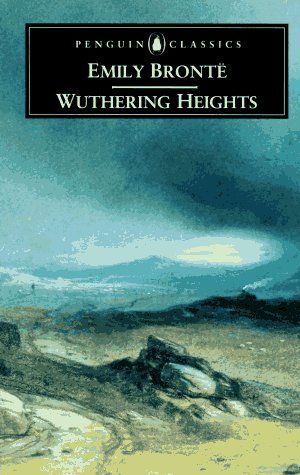
Note on Image: The image at the top of the post is a book cover for the novel. I found the image on https://brimfieldpubliclibrary.com/wuthering-heights-by-emily-bronte/.
LINK TO AVALONIAN ROSE FAERY MYSTERIES PATREON: patreon.com/AvalonianRoseFaeryMysteries
Further Reading
- Wuthering Heights by Emily Brontë
- https://whiteroseofavalon.life/2021/04/10/heathcliff-as-byronic-hero/
- https://whiteroseofavalon.life/2022/03/17/wuthering-heights-a-happy-ending/
- https://whiteroseofavalon.life/2022/09/26/catherine-earnshaw-a-faery-changeling/
- https://whiteroseofavalon.life/2024/11/29/the-two-catherines-of-wuthering-heights/
- https://whiteroseofavalon.life/2022/04/27/emily-brontes-impact-kate-bush-the-music-videos-and-the-unthanks/
2 responses to “‘Wuthering Heights’ and the Art of the Unreliable Narrator”
This is a brilliant and nuanced analysis of the unreliable narrators in Wuthering Heights! You’ve captured the essential tension that makes the novel so endlessly fascinating. Your focus on Nelly Dean’s specific biases and her active, sometimes manipulative, role in the story is spot-on. I’d love to add a few thoughts that build on your excellent points.
On Nelly Dean’s Unreliability:
You’re absolutely right that her class position and personal resentments are key. She is not just a passive recorder; she’s a stage manager. Her decision to let Heathcliff overhear Catherine’s confession is a perfect example. She often withholds information (like not telling Edgar about Isabella’s elopement immediately) or intervenes directly (like burning Catherine’s letters or facilitating meetings). This means the plot itself is filtered through her sense of what’s “proper” or what serves her own moral compass. Her narrative isn’t just a recollection; it’s a defense of her own actions. When she admits to a fault (like neglecting Catherine’s illness), it’s often to showcase her overall virtue or to highlight another character’s greater flaw.
On Mr. Lockwood’s Unreliability:
His unreliability is of a different, but equally important, kind. If Nelly is too involved, Lockwood is profoundly disconnected. You noted we know little about him, which is crucial. He is a man from the polite, superficial world of the city, entirely unequipped to understand the raw, primal passions of the Heights. His initial attraction to the younger Catherine is based on a trivial romantic fantasy, and his famous nightmares after reading Catherine’s diary reveal he projects his own genteel anxieties onto the scene. His narration frames the entire story, and that frame is one of misinterpretation. He consistently misreads social cues (thinking Heathcliff is more gracious than he is, completely misjudging the relationships in the household). This means the novel is a story told by a biased insider, to a clueless outsider, who then writes it down for us. The distortion is potentially doubled.
Other Questions to Consider (as you invited!):
1. Nelly’s “Moral” Editing: Does her staunch, conventional morality cause her to flatly misunderstand the nature of Catherine and Heathcliff’s bond? She frames it as a destructive obsession (which it is), but does she completely fail to grasp its cosmic, identity-defining depth because it exists outside her understanding of Christian love or socially sanctioned marriage? Her reliability falters not just in what she reports, but in her interpretation of its meaning.
2. Lockwood’s Voyeurism: Is Lockwood a reliable conduit for Nelly’s tale? He is an eager listener to a sensational, gothic saga about his mysterious neighbors. Could he, in his retelling, unconsciously embellish the Gothic tones? While we trust he’s transcribing Nelly’s words, his choice to include certain details (the ghost, the violence) highlights his own fascination with the macabre.
3. The “Evidence”: You mentioned Isabella’s letter. Even the documents within the narrative—Catherine’s diary margins, Isabella’s letter—are filtered through Nelly. She preserves what she chooses to preserve and presents it when it suits her narrative purpose. We have no unmediated access to any primary source.
Your point about the younger generation is excellent and often overlooked. Nelly’s affection for Hareton and young Catherine does color her portrayal of them in a softer light, just as her disdain for Linton Heathcliff makes him seem purely spiteful and frail. It’s a great reminder that her “maternal” bias works in both directions.
Ultimately, you’ve hit on why the novel feels so alive: the “truth” is not a fixed point. We are left piecing together a tragedy from the account of a prejudiced housekeeper and the notes of a self-involved tenant. Emily Brontë doesn’t give us a trustworthy narrator; she gives us human voices, full of their own flaws and agendas. This forces us, the readers, to become active participants, judging the judges, and forever wondering about the ghostly core of the story that lies just between and beyond their words.
Thank you for such a stimulating and well-argued post, Maranda! It’s a pleasure to engage with such a deep dive into one of literature’s most masterful narrative structures. What are your thoughts on how this narrative unreliability shapes our perception of the novel’s central theme—that of an all-consuming, destructive, yet transcendent love?
I am so delighted that my analysis was so interesting to you! I have to agree that Nelly’s own morality is definitely a key piece of why she would judge Cathy and Heathcliff so harshly. We even see her judge Joseph for his zealotry, showing that she has a very staunch view of Christian morality, and does not like those who have extreme views in either direction.
I also highly doubt that Lockwood is a reliable conduit for the tale. While I firmly interpret Cathrine’s Ghost as truly being there and I firmly believe that the young boy truly did see both Catherine and Heathcliff together haunting the Moors at the end of the story, I think the darkness of the romance and the obsessive nature of the love could definitely have been amped up by Lockwood.
The lack of primary sources is key to the uncertainty in the narrative. We know that Nelly and Lockwood “see” and “read” letters and diary entries made by others, but we have no way of knowing if they are editing the contents. After all, both have their own agendas and reasons for presenting the tale the way they do.
As for your final question. I think that the narrative unreliability shapes our perceptions of the novel’s central theme by allowing us to have many interpretations of the theme. Are Cathy and Heathcliff doomed soulmates? Yes. Are Cathy and Heathcliff tragic lovers whose life circumstances prevented them from being together until they were both ghosts? Yes. Are Cathy and Heathcliff destructive to each other? In many ways. Do Cathy and Heathcliff truly love one another? Undoubtedly. All of these things and more can be true, but because of the unreliable narrators, we do not know what their love was from their perspectives. We do not get to have their own words describing their eternal bond, except through the voice of Nelly. Even the fact that she remembers exact quotes of what they said adds to her unreliable nature (after all it had been 18-21 years since she heard these things spoken). At the end of the day, all of this is why myself and other lovers of this novel can never stop from returning to it again and again!
As always, thanks for reading and commenting!