
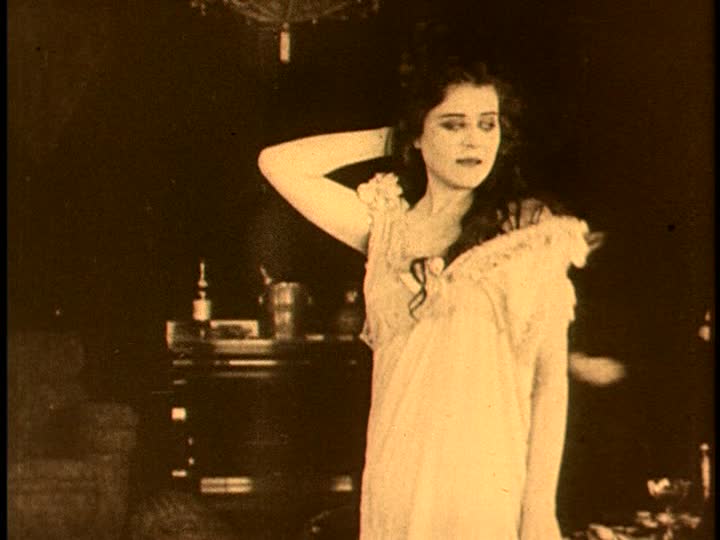
Welcome back to White Rose of Avalon, my Darlings. For today’s blog post, I am sharing my analysis of the poem The Vampire by Rudyard Kipling. I have long loved this poem, especially as it went on to inspire one of the only Theda Bara films we can still watch today, A Fool There Was! Each of the sections in bold is my analysis of the poem. I accessed the text of the poem on https://poets.org/poem/vampire-0.
The Vampire
by Rudyard Kipling
The verses—as suggested by the painting by Philip Burne-Jones,
first exhibited at the new gallery in London in 1897. (This is a note placed at the top of the poem, not technically part of the poem, but I chose to leave it when I pasted the text of the poem, as it shows that this poem was written in conjunction with a painting.)
A fool there was and he made his prayer
(Even as you or I!)
To a rag and a bone and a hank of hair,
(We called her the woman who did not care),
But the fool he called her his lady fair—
(Even as you or I!)
~This opening stanza introduces us to the Fool of the poem, who is becoming entranced by a woman who is clearly not what she seems. Rag, bone, and hank of hair are hints at ingredients for spells, so it may suggest that she is a witch, even though the title of the poem tells us differently!
Oh, the years we waste and the tears we waste,
And the work of our head and hand
Belong to the woman who did not know
(And now we know that she never could know)
And did not understand!
~The second stanza describes just how much time and energy are devoted to pleasing the woman, one who could never understand the ways of humans. She has completely entranced the Fool to be her willing servant, and that is what this stanza is meant to convey!
A fool there was and his goods he spent,
(Even as you or I!)
Honour and faith and a sure intent
(And it wasn’t the least what the lady meant),
But a fool must follow his natural bent
(Even as you or I!)
~The third stanza describes how the Fool has also spent his goods, likely giving up his wealth to support the whims of the Vampire woman. He had faith that she was his true love and gave her everything he could!
Oh, the toil we lost and the spoil we lost
And the excellent things we planned
Belong to the woman who didn’t know why
(And now we know that she never knew why)
And did not understand!
~The fourth stanza describes the pain of losing everything to a relationship with a woman who did not love you and did not care that you sacrificed everything for her!
The fool was stripped to his foolish hide,
(Even as you or I!)
Which she might have seen when she threw him aside—
(But it isn’t on record the lady tried)
So some of him lived but the most of him died—
(Even as you or I!)
~The fifth stanza describes the Fool having lost everything of value in his life due to his obsessive love for the Vampire woman. Most of his will to live is completely gone, having been drained by the relationship.
And it isn’t the shame and it isn’t the blame
That stings like a white-hot brand—
It’s coming to know that she never knew why
(Seeing, at last, she could never know why)
And never could understand!
~The final stanza describes how the Fool is most pained by realizing that the Vampire woman never cared for him, even more pained than any other part of this toxic relationship, which he had endured!
~At the end of the day, it is a very interesting poem, as it does not clearly state that the woman was a Vampire in the true sense. It reads more as a poem about the fears men had of trusting women, especially those women who truly enthralled them sexually, during Kipling’s generation. He seems to be expressing a fear of a wife who sucks the life out of her husband, taking him for all that he’s worth, and leaving him a shell of a man! However, I interpret the Vampire to be much more literal in the Theda Bara film A Fool There Was, as Bara steals the man from his loving and traditional wife in the film. Even if we never see her drink blood, she is clearly draining him of life energetically, which I count as being an energy Vampire, at the very least. I think this is fascinating, as it shows how different versions of the same story can be artistically interpreted in different ways. I hope you have enjoyed my analysis of this poem. Let me know your thoughts in the comments below!
Note on Image: The image at the top of the post is Theda Bara in the film adaptation of the poem. I found the picture on https://moviessilently.com/2015/11/01/a-fool-there-was-1915-a-silent-film-review/.
LINK TO AVALONIAN ROSE FAERY MYSTERIES PATREON: patreon.com/AvalonianRoseFaeryMysteries
Further Watching
- A Fool There Was (1915)