
Welcome back to White Rose of Avalon my Darlings! For today’s post, I have decided to discuss the concept of Celtic Sacrificial Kingship and how it relates to Seasonal Sovereignty. There are several cases of Sacrificial Kingship and Seasonal Sovereignty in Celtic Lore, however, I will be focusing on the tales of Blodeuwedd, Guinevere, and also to a lesser extent Morgan le Fay.
The tale of Blodeuwedd is found in The Mabinogion, she is featured in most of the Fourth Branch. She is the Goddess formed of flowers, either three blooms or nine depending on the version of the legend, to be the bride of Lleu Llaw Gyffes. In the early part of their marriage, Blodeuwedd is content and relatively happy, but this happiness does not last. Soon, Blodeuwedd gets more and more discontent, as Lleu begins to travel more and more for business. It is during one of his trips for business that Blodeuwedd invited a Lord from a neighboring kingdom to a feast in her castle, as he had tarried late on their lands while hunting, as was the custom of Celtic hospitality.
That Lord is named Gronw Pebr, and it is at that feast when Blodeuwedd feels the prick of love’s arrow for the first time. Blodeuwedd and Gronw are infused with love for one another during the festivities. Upon the the end of the meal, the two go to bed with one another, and do so for the next two nights, which is as good as marriage by medieval Welsh law! When the two lovers have to part, they devise a plan to stay together, by killing her husband. Over the course of the next year, they plan out their murder plot, but when they make an attempt on Lleu’s life they fail. Blodeuwedd ended up losing her true love when Lleu’s Uncle Gwydion killed Gronw and cursed her to become an Owl!
Now, I am going to break down how this tale fits into the concept of Sacrificial Kingship and Seasonal Sovereignty. Lleu is the Solar Hero, the Sun God, a figure who is represented by a Golden Eagle. His marriage to Blodeuwedd likely takes place during the height of the light half of the year, around Beltane, which is associated with Blodeuwedd, who is one of the May Queens and Flower Brides of Celtic lore! She shows her love for Lleu in the light half of the year, during the season when he rules, by right of Blodeuwedd as a Seasonal Sovereignty Goddess. Gronw is a Hunter Lord associated with the Stag, a figure of the Winter and dark half of the year. I associate her love for Gronw with Samhain, as it opposes her love of Lleu on the Seasonal Wheel of the Year! Her love for each in turn gives that Lord Kingship during his half of the year. The sacrifice part is made by both Lords, as each is killed or nearly killed. Lleu is nearly killed by Blodeuwedd and Gronw, while Gronw is truly killed by Gwydion! That is what makes this tale one of Sacrificial Kingship and Seasonal Sovereignty.
In the case of Guinevere, she actually has several versions of the Sacrificial Kingship tale in different versions of the Arthurian legends. There is Arthur as Winter King, Guinevere as Flower Bride, and Melwas, King of the Summerlands, as the figure who stole Guinevere away. There was Lancelot as the Winter Hero, Guinevere as the Flower Bride, and Melwas as King of the Summerlands who stole her away. Finally, there is Arthur as the Solar King, Guinevere as the Flower Bride, and Lancelot as the Winter Hero! Whoever Guinevere is with is the one who rules that point in time, this can also be seen with different variants of the myths where Mordred marries Guinevere to take over Camelot, with him being in opposition to Arthur, but it is less clear cut in a Seasonal Sovereignty perspective.
Now, I want to briefly mention Morgana and Sir Gawain and the Green Knight, because she has a sort of Seasonal Sovereignty aspect in that tale. The Green Knight is the Lord of Winter, the transformed Sir Bertilak who is sent to Camelot in hopes of scaring Guinevere to death. Instead, Gawain proved his bravery, a true Solar Knight ready to test his virtues. He goes through a whole series of tests and wins only getting a small knick of the ax blade for hiding something. Morgana is the one who set these challenges in place and obviously had a soft spot for Bertilak to trust him with doing her tasks, and she goes on to trust and honor Gawain as a Knight of the Goddess for passing her tests! In this case, Gawain would go on to be in favor during the light half of the year, while Bertilak is in favor during the dark half. Not a romantic version or a straightforward version, but I do think it has overtones of the Seasonal Sovereignty motif.
I hope you have enjoyed this analysis of Seasonal Sovereignty and Sacrificial Kingship. What version of this motif do you prefer? Let me know your thoughts in the comments below!
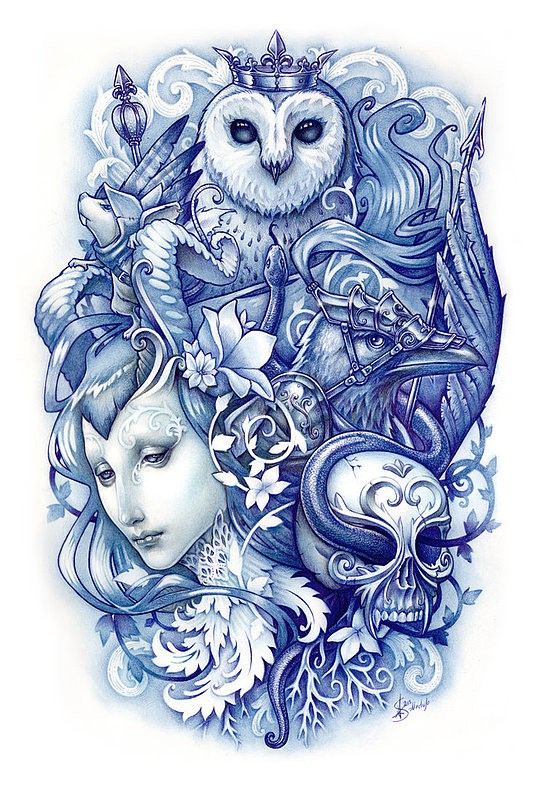
Note on Image: The image at the top of the post is a Blodeuwedd artwork that is gorgeous. I found the image on https://www.pinterest.com/lashettew/blodeuwedd/.
Tarot Note: I have a page offering tarot and oracle readings for those interested in these services! I am very happy to be offering these readings to my treasured readers at White Rose of Avalon! Link to page: https://whiteroseofavalon.life/tarot-and-oracle-readings/
Further Reading
- The Mabinogion translated by Sioned Davies
- Once and Future Queen: Guinevere in the Arthurian Legends by Nicole Evelina
- Sir Gawain and the Green Knight
- Sir Gawain Knight of the Goddess by John Matthews
- Ladies of the Lake by Caitlin and John Matthews
2 responses to “The Welsh Celtic Concept of Sacrificial Kingship”
[…] The Welsh Celtic Concept of Sacrificial Kingship […]
[…] https://whiteroseofavalon.life/2023/11/22/the-welsh-celtic-concept-of-sacrificial-kingship/ […]